Movement for Life
Run less.Train more.Recover on purpose.
The first version of this blog ran in 2021. The principle held up. This edition takes it off the pavement and onto the trail, because the Facet Seven Fitness Hippies are headed to Bandera, and the dirt asks for more than the road ever did.
Many marathon programs have you running 4 to 5+ days a week, with the idea that if you condition your body enough in training, it will handle the demands on race day.
I'd like to bring back the mantra for this blog.
"Anything done too much loses value."
The mantraMost runners I work with come to me after they've been living that life. Months, sometimes years, of high mileage, only to end up in chronic pain, with some injuries stopping them in their tracks.
Any runner can reduce injury risk and improve performance by running less volume and spending that time on strength training and recovery. Everyone is different, but there are key indicators you can watch all season to make sure you're not overdoing it.
The road is flat. Bandera is not.
Road running asks one question over and over: can you repeat this stride? Trail running asks a new question every step. Rock or root. Climb or descent. Plant or skip.
The Bandera course runs through the Hill Country State Natural Area, and the race's own motto sums it up: a trail where everything cuts, stings, or bites. Loose limestone, steep pitches, and sotol lining the path.
That terrain multiplies three things that more miles can't fix on their own:
Every rock is a single-leg balance test.
Every descent loads your quads while they lengthen, the kind of loading that causes the most soreness.
More impact variety means more tissue to repair between runs.
That's why the answer for trail is the same answer we gave in 2021, just louder. Run less. Train more. Recover on purpose.
Are you running too much?
You may be thinking "my body needs volume," or wondering how you'd even know. The questions to ask yourself:
- How do you feel when starting your run? Energized or sluggish?
- How do your joints and muscles feel? Any chronic pain?
- Are you improving, maintaining, or regressing in performance?
- Is your resting heart rate elevated when you wake up?
- Trail add: Do your ankles roll or your quads fade on the downhills late in a long run?
Your body tells you a lot if you listen. If you're checking these boxes, chances are you're running too much. Keep in mind, pain is a lagging indicator. By the time it shows up, the problem has been building for a while.
I always tell athletes that our bodies are designed to run, from the arch of the foot to the muscles of the neck. Running should feel natural. When it doesn't, the problem usually lives in one of these places.
What breaks runners down
A. Size to weight ratio
Carrying more mass than your frame is built for multiplies the impact of every stride. Short intervals often feel fine, while anything longer starts to hurt. On trail, descents amplify it. Resistance training and dialed-in nutrition are the fix, not more miles.
B. Movement patterns
The number one issue I find with runners is bad movement patterns. Old injuries that changed your mechanics. Sleep positions that twist you out of line every night. If the wheel wobbles enough, eventually it jacks up the axle. On the trail, the wobble gets tested on every uneven step.
C. Stride and foot strike
Stride length and foot strike depend on your size, your gait, and the speed and distance you plan to run.
- Sprints and short runs (under 3 miles, in the eyes of a marathoner) usually allow a more forefoot strike and a stiffer foot.
- Long-distance running is less aggressive and favors a midfoot strike with a softer foot to absorb the stride.
- Trail: shorter, quicker steps. Eyes 10 to 15 feet ahead, not on your shoes. On steep climbs, power hike with hands on your quads. Hiking a hill well beats running it badly.
- Want eyes on your mechanics? Email info@facetsevenfitness.com for a movement assessment and gait analysis.
D. Footwear
Many people are just in the wrong shoes, plain and simple. I'm not against any shoe. Everything has its place.
- Low-drop and minimal shoes let the foot splay and the muscles of the foot, ankle, and calf do what they were built to do. Great on natural surfaces like dirt, sand, and grass, and for short efforts on pavement. Use them too much on concrete and remember the mantra.
- Cushioned, higher-drop shoes (more than about 3mm heel to toe) help with long efforts on hard, unnatural surfaces where impact adds up.
- Trail shoes are their own category. Look for lugs that grip loose rock and a protective layer underfoot, because Bandera's limestone will find every soft spot. Break them in on Memorial Park's trails well before race day.
"Strong before long, fast before far."
The mindsetThen how does running less help?
Spend time getting stronger and faster before stacking high mileage, and you'll reach the finish line sooner and in better shape.
We all know the feeling. You take off and your legs feel like springs, fresh lungs, like you could go all day. Then mile 4 hits and you're breathing fire. To understand why, you need to look at how the body makes energy. It's complex, but for this conversation we'll keep it to 3 systems.
The three energy systems
Phosphagen
Uses stored creatine phosphate for your first few seconds of all-out effort, roughly 10 seconds of Incredible Hulk.
Glycolytic
Breaks down glucose fast, with no oxygen required. It takes the lead in hard efforts lasting roughly 10 seconds to 2 minutes and carries more of the load as you push toward threshold.
Oxidative
Uses oxygen to burn fat and carbohydrate. It runs everything from sitting on the couch to all-day trail pace.
Mapped to training zones:
- Zone 1 to 2 (conversational, the pace you could hold all day on the trail) = System C dominant, heavy on fat.
- Zone 3 to 4 (tempo, grinding up a long climb) = System C still working, with System B carrying more.
- Zone 5 and short sprints (scrambling a steep pitch, a surge to pass on singletrack) = System B at its peak, with System A for the first few seconds.
We're always blending all three systems, dominant in one depending on the effort. It's a continuum, and understanding it can make or break your race.
Almost all of a 50k runs on System C. Every steep climb dips into System B, and each dip spends a match you don't get back. A bigger aerobic engine means fewer matches burned per hill.
So why train System A and B at all? Because of what fast, hard work does to the nervous system and the muscle:
- If you don't run fast in training, you won't be fast on race day.
- Your body won't know how fast it is until you ask it to show you.
- Spending time above your comfort zone raises the ceiling of your comfort zone.
The formula
Build the aerobic base, add a little top-end speed, then add strength. You climb more hills before the matches run out.
How strength breeds endurance
Look at ground contact time, the time your foot spends on the ground each stride. Walk slowly and you spend a long time on the supporting leg. Speed up to a jog, then a run, and that time shrinks as your speed climbs.
Getting off the ground faster takes more power. That's where strength training comes in. In a well-known study, trained endurance runners replaced about a third of their endurance training with explosive strength work for 9 weeks. Their 5k times and running economy improved, and their ground contact times dropped (Paavolainen et al., 1999, Journal of Applied Physiology). Less running, better running.
Trail adds two more reasons:
- Descents. Downhill running is eccentric loading, which does the most muscle damage. Strength work, especially controlled lowering, builds your legs' tolerance to that damage before race day asks for it.
- Ankles and hips. Strong, stable joints turn rocks and roots into footing instead of hazards.
The formula
Build strength to build power. Power gets you off the ground faster, and faster off the ground is faster running.
Strengthen the legs and steady the ankles. You descend faster and fall less.
Training like this taxes the body, which brings us to the next point. Hard work needs hard recovery.
More time for recovery
Life's impact on your body is a balance of stress and breakdown against rest and recovery. The body is always trying to heal from the chaos we put it through, and it's remarkably good at it when we give it time. The danger is that under-recovery isn't always obvious. It's death by a thousand cuts.
Any time we lift heavier or run faster, farther, or steeper than we've adapted to, we create small amounts of muscle damage called microtrauma. That can mean inflammation and soreness. Ever finish a hard session and barely walk the next day? That's DOMS, delayed onset muscle soreness, and it typically peaks 24 to 72 hours after a new or hard effort. Run 5 days a week and the odds you're fully recovered for every session are slim.
Recovery shows up in three places:
- The time and type of rest we craft for ourselves.
- The quality of sleep we craft for ourselves.
- The fuel we craft for ourselves.
In 2021 I promised we'd cover point 3 in a later blog. We built something better. Keep reading.
1. Recovery training: what and how
Less time pounding pavement means more time for recovery training, the practices that help flush waste out of your tissues and get nutrients back in. We say "craft" because it takes planning. Three we recommend:
- Yoga: active, controlled movement, slow or held in position, that lengthens the muscles under your own bodyweight. One third of our Holy Trifecta for a reason.
- The Ready State: a system by Dr. Kelly Starrett using balls, rollers, bands, and joint positions to restore movement capacity.
- Pandiculation: the body's natural reset switch. Watch a dog wake up and stretch, paws spread. That's pandiculation. Clinical Somatics with Sarah Warren is a great course to learn more.
All of these help you walk into your next session fresh, which means you perform better in it.
2. Sleep: before, during, and after
We spend roughly a third of our lives asleep, and that's where the body does its heaviest repair. Again, craft it:
- Create a bedtime routine. Bodies thrive on routine. Even a 5-minute wind-down tells your system it's time to rest.
- Watch the little lights. Bright, blue-heavy light in the evening suppresses melatonin and tells your body it's daytime. Keep evening light dim and warm, like orange or red.
- Learn your rhythm. Everyone's ideal sleep window is different, but we all cycle through the same stages, about every 90 minutes, 4 to 6 times a night. Most adults need 7 or more hours to get enough cycles.
The stages of sleep:
- N1: the light transition from awake to asleep, a few minutes.
- N2: light sleep and the largest share of the night.
- N3: deep, slow-wave sleep. This is prime time for physical repair and growth hormone release, and there's more of it early in the night.
- REM: dreaming sleep, key for memory and learning. REM periods get longer as the night goes on, so cutting your morning short cuts your REM.
3. Fuel: the chapter we promised
Training breaks you down, sleep rebuilds you, and fuel is the raw material. A 50k on Hill Country rock will expose a fueling plan built on guesswork, both in training and on race day. We turned point 3 into a full course.
Extra time = strength training
If you don't load your bones, they get weaker. Lift and carry heavy things and they stay strong. Stronger tissues and connective tissue also lower your injury risk. But we know that's not the only reason you're reading this.
Stated simply: the stronger your body is, the more stable and in-line it stays, which lets you produce more power. More power means less time on the ground, which means you're faster.
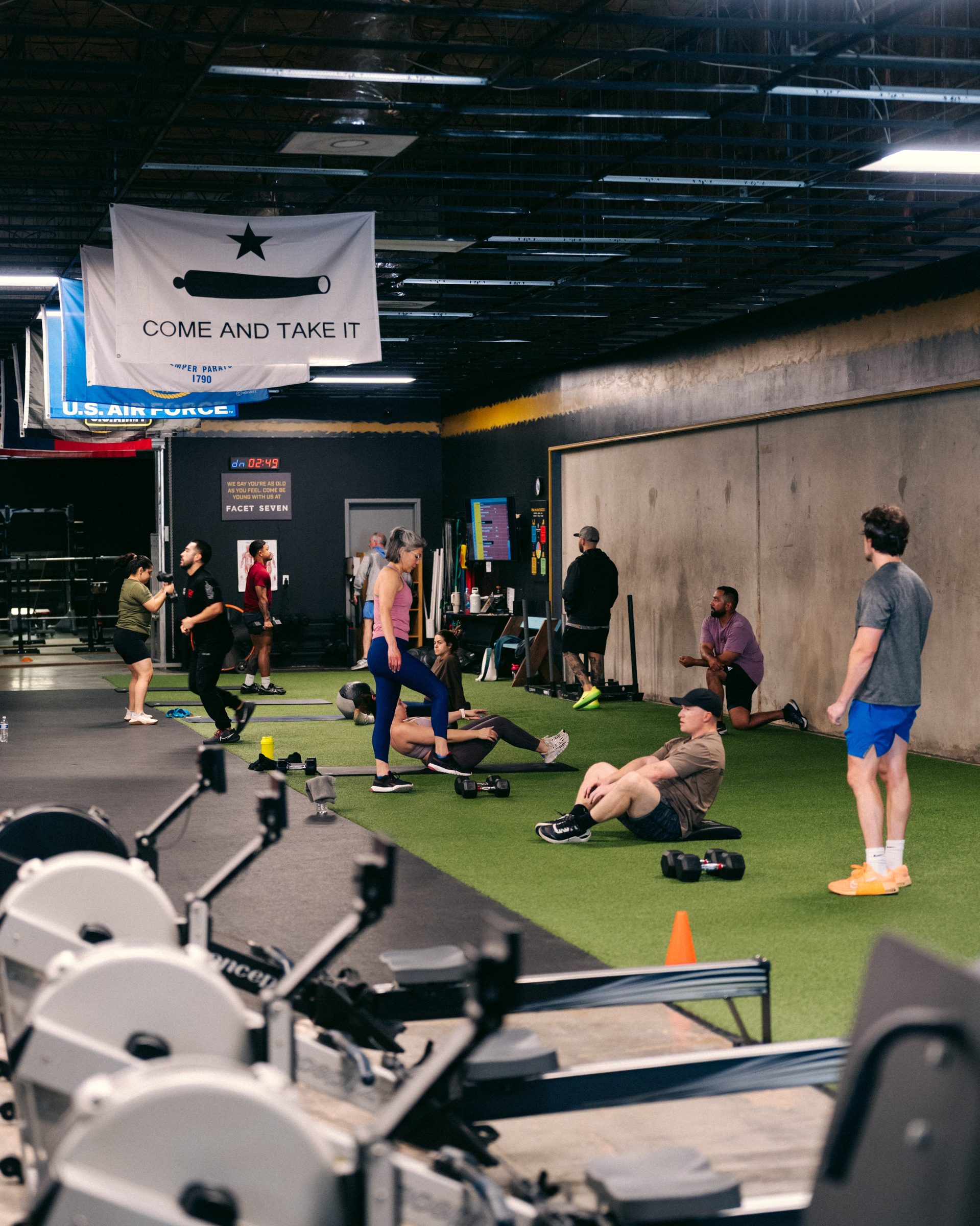
A trail week that runs less
Three runs, three strength sessions, and recovery built in. The race lands January 10, right as our Fall Functional season hands off to Winter Strength, so the timing works in your favor.
Lower body and posterior chain + yoga
Power and durabilityHill repeats or strides
Systems A and B, climbing economyUpper body and core
Posture and arm drive late in the raceEasy aerobic run or hike
System C, time on feetSingle leg, ankles, slow eccentrics
Descents and rocky footingYoga, Ready State work, or off
RecoveryFitness Hippies, Memorial Park, 7:00 AM
Terrain, pacing, communityWant exercises to start with? Here are the three best kettlebell exercises for runners. You can also grab the free Facet Seven workout plan (PDF).
What makes Facet Seven strength for running different
- Ancillary work that targets the muscles behind joint mechanics and stability.
- A blend of compound lifts, like the barbell squat, with unilateral work, like step-ups, so the core learns the asymmetrical loading that every stride demands.
- Trail add: foot and ankle work, lateral stability, and controlled eccentrics to prepare you for rocky descents.
- A volume structure that supports your running progression instead of competing with it.
- A bridge between strength and endurance volume so you don't overtrain.
- 3 days of resistance training built to blend with your run schedule.
- Access to our class library, including yoga.
Movement for Life
The road to Bandera
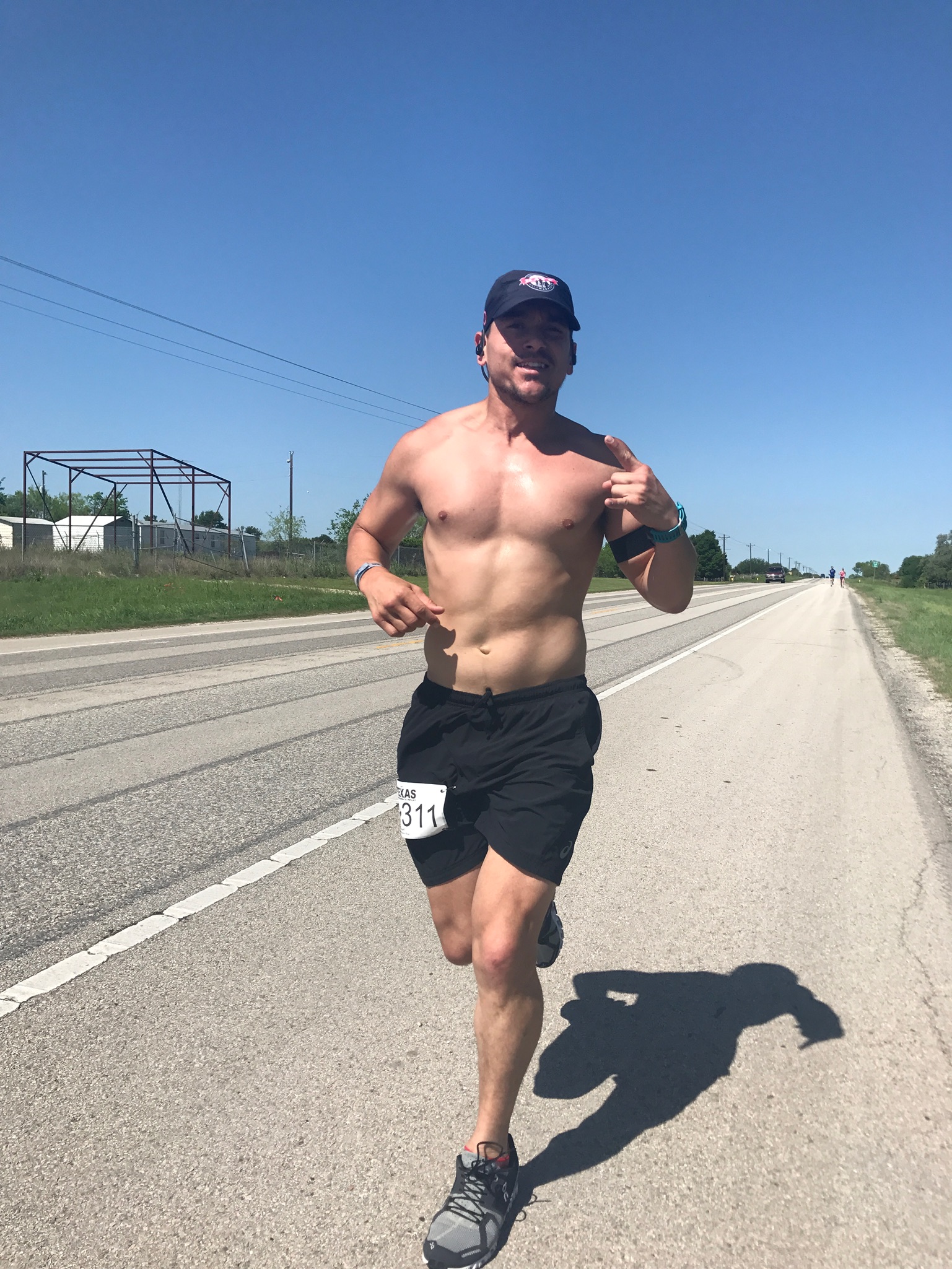
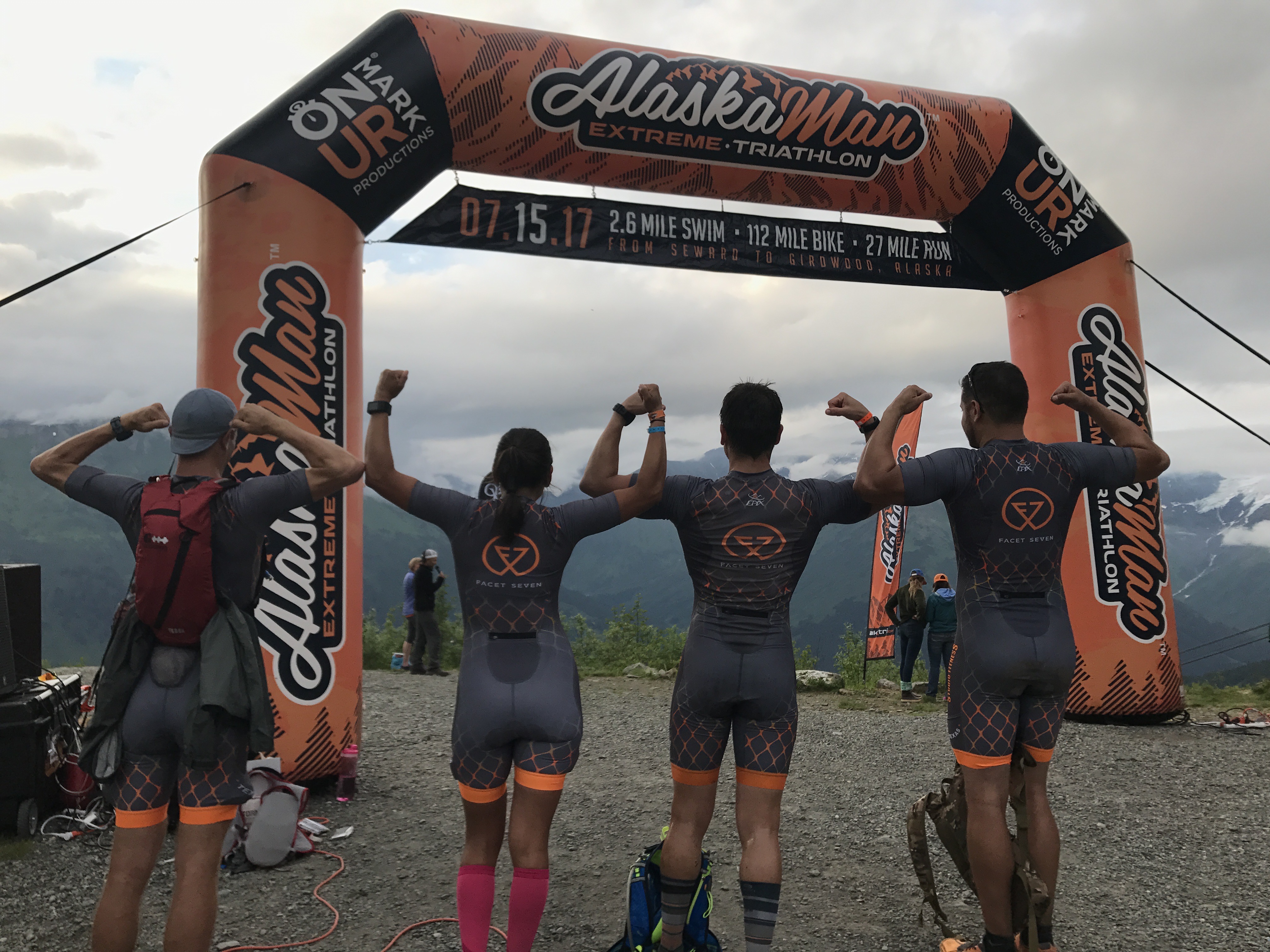
The Facet Seven Fitness Hippies are running the Bandera 50k. Everything in this blog is how we're getting there, and you're invited.
Not ready for 50k? Bandera also offers a 25k on Sunday and a 100k on Saturday.
Join the Fitness Hippies, get the run program
Anyone who joins the Fitness Hippies gets access to our trail run program in the Facet Seven app. Strength, runs, and recovery, scheduled week by week all the way to race day.
Run with us every Sunday at 7:00 AM at Memorial Park on the Bayou Wilds trails.
Conclusion
If your program is on point, you'll see it. A lower heart rate at the same pace or faster. Comfort in a lower gear. A new PR. On the trail, add one more: you'll still be running well on the last climb when everyone around you is hiking.
Want proof instead of a feeling? Take your FitnessEQ baseline now, including the Cooper test for endurance, then retest 8 to 12 weeks out from the race. You'll taper from data instead of nerves.
Run less, train smarter, and recover on purpose. See you on the trail.

Movement for Life.
Cheers,
Layn Chess
Founder & Training Director
Facet Seven Fitness
© CMV, LP. Facet Seven Fitness™ is a brand of CMV, LP