If you feel sluggish, inflamed, numb, disconnected, who’s really in control?
THINK ABOUT IT...
You’ve been conditioned to think about your body as something mechanical, as an object to drag through the day- something to push, fix, punish or decorate…
But never as sacred…
Never as intelligent… as a vessel of Divine intention.
The ancients knew this. The body was never a burden, it was a temple. Not just in theory, but in function.
Every breath you take, every cell in your gut, every spark in your nervous system, it’s all part of a living code designed for perception beyond the 5 senses. But the modernism of the recent centuries is teaching you constantly to ignore it.
Start with the gut.
The gut produces more neurotransmitters than the brain, it’s your second brain, regulating your mood, your energy, and your spiritual receptivity. Yet it’s constantly under attack.
Pesticides, processed foods, antibiotics, synthetic preservatives, all designed not just to destroy gut flora, but to destroy our capacity to feel clearly. When your gut is compromised, your mind is clouded. When your digestion is inflamed your thoughts are unstable.
Those in the “remedy” business don’t want you to be sharp, focused, and intuitive… they want you bloated, distracted, emotionally volatile, and they’ve engineered the food system to be sure.
But it’s not just the food. It’s your water, your air, your light.
Tap water filled with endocrine disrupters. Air saturated with industrial toxins. Artificial light that scrambles your circadian rhythm and drains your life force. And through it all you're told this is normal, you're told to adapt. To medicate. To caffeinate. To carry on. And when your body starts breaking down they offer pills instead of root solutions.
They give you diagnosis after diagnosis but never ask the real question -
what are you feeding the instrument of your divinity?
That system doesn’t profit from your clarity…it profits from your chaos.

This is why healing your body isn’t just a wellness trend.
It’s an act of Rebellion.
It’s the foundation of awakening.
Your consciousness can’t fully rise in a body that’s drowning in inflammation, toxicity, and fatigue.
You can’t connect to the Divine when your nervous system is in survival mode. You can’t remember who you are when your cells are constantly battling the poisons of modern life.
Liberation isn’t only mental, it’s cellular. And every choice you make, every meal you eat, every breath you take is either feeding your awakening or feeding your suppression.
And here’s the real breakthrough.
Your body wants to wake up. It’s always communicating. Always recalibrating. Always moving towards healing when you give it even half a chance. And when you start treating it like the intelligent energetic vessel it is, everything shifts. Your thoughts clear, your emotions balance. Your intuition sharpens. That’s not a coincidence. That’s coherence.
That’s not a coincidence. That’s coherence.
The state where your body, mind, and spirit align into one unified field. That’s when you stop living from your head, and start living from your whole being. That’s where awareness stops being a concept, and starts becoming your baseline.
Most coaches bypass this.

They tell you to rep your problems away while still eating food that numbs your senses and scrolling until your dopamine is fried. But you can’t hack your way to awakening. You have to live it, feel it in your skin. In your gut, your breath. This is true embodiment. Not the aesthetic kind, but the kind that rewires your nervous system and clears the fog from your perception. Because the Divine doesn’t live in the sky or in scriptures. It lives in your blood, your bones, your breath. You don’t have to look outside to find it. You just have to clean the vessel it’s been trying to move through all along.
TAKE BACK CONTROL OF WHO YOU ARE.
Rebel against being blind… Rebel against the leeches of your energy.
Find who you were meant to be.
Find who you are.
We have courses designed to awaken you. Learn the basics of how your body moves.
DISCOVER HOWTake the purple pill and go down the rabbit hole with us. We are here for you, all the way.
TAKE THE LEAPMovement for Life · Field Notes
I Started Running Again. The First Mile Told On Me.
A year off the dashboard. A new watch. A hard look at the numbers, the breath I'd been missing, and the one input I'm changing.
It's late. The gym is quiet. I'm writing this when I should be sleeping, and the irony isn't lost on me. I want to get home soon so I don't wreck tonight's sleep score. That sentence alone tells you I'm back on the wagon.
Here's the honest version of how I got here.
Where I started
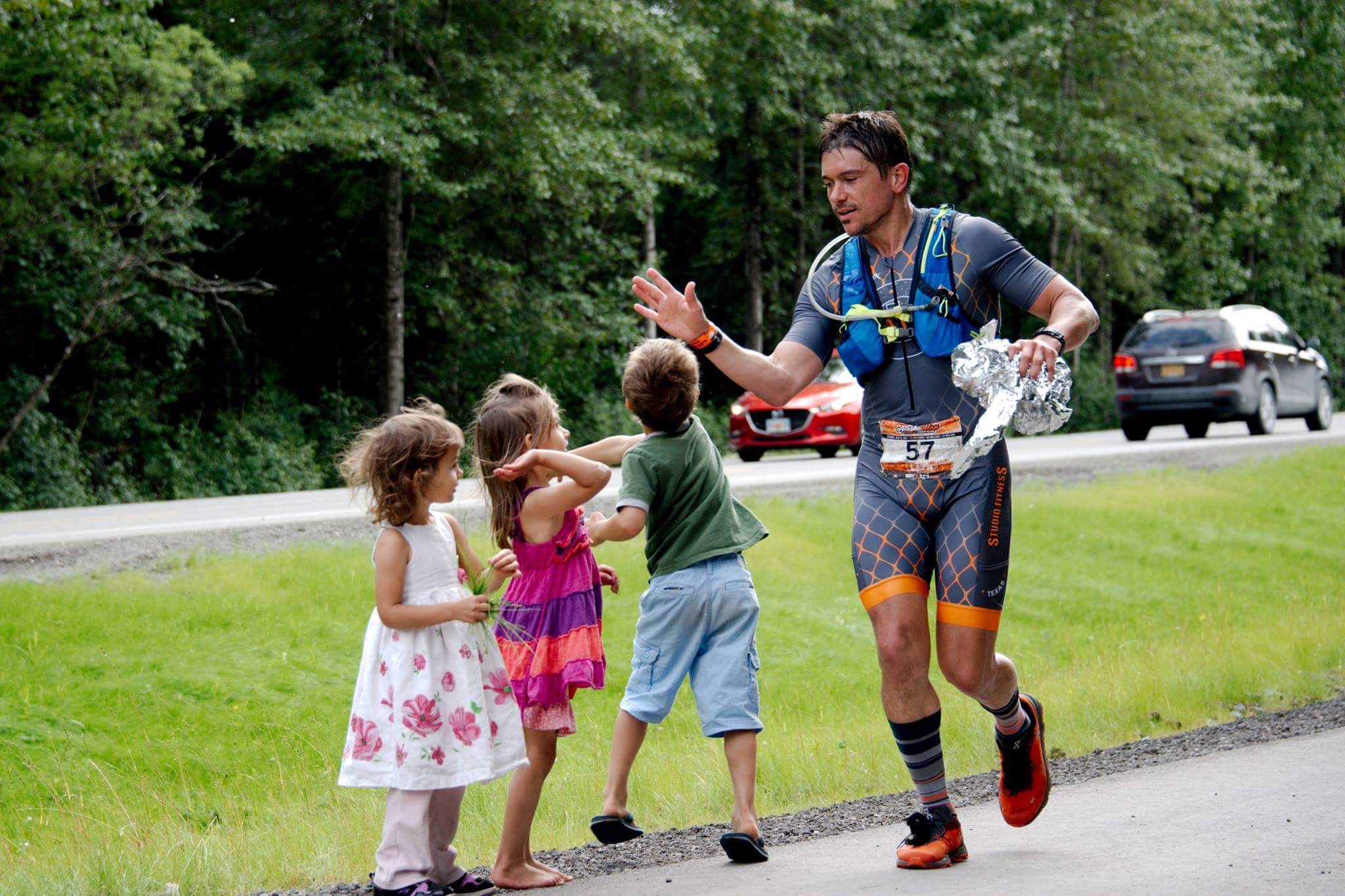
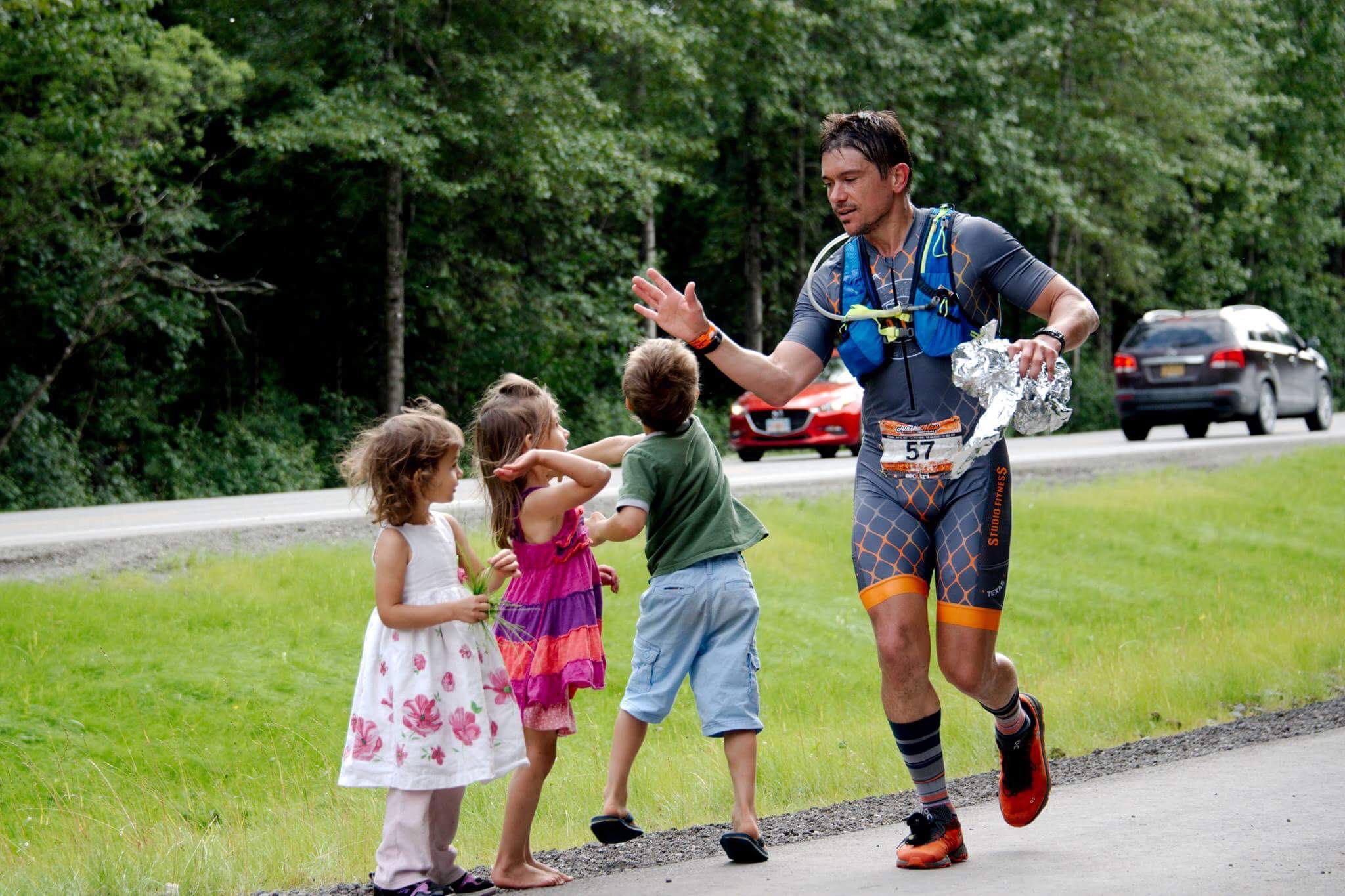
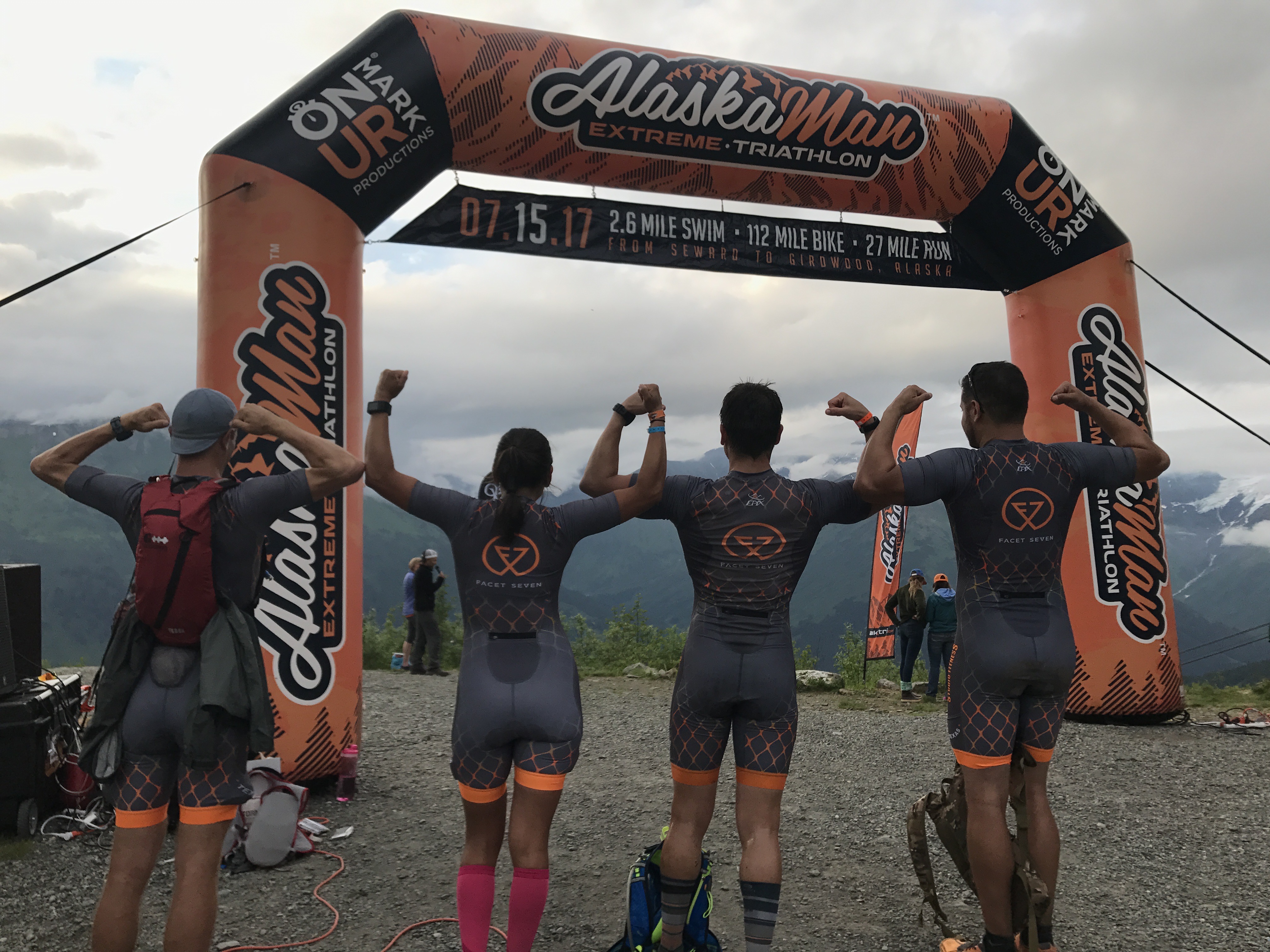
I'm a triathlete. Or I was, depending on which year you ask. I came up through the marathon in 2014 and found triathlon in 2015. January 2016 I lined up for the Bandera 50K, thirty-plus miles across the Texas hill country in one push. A half iron in Austria. Then the big one, AlaskaMan up in Seward, an extreme full I had no business finishing and will brag about until I die.
At the peak of that build, my watch logged almost 800 miles and 65 hours in a single month. For about five years, training wasn't a habit. It was who I was.
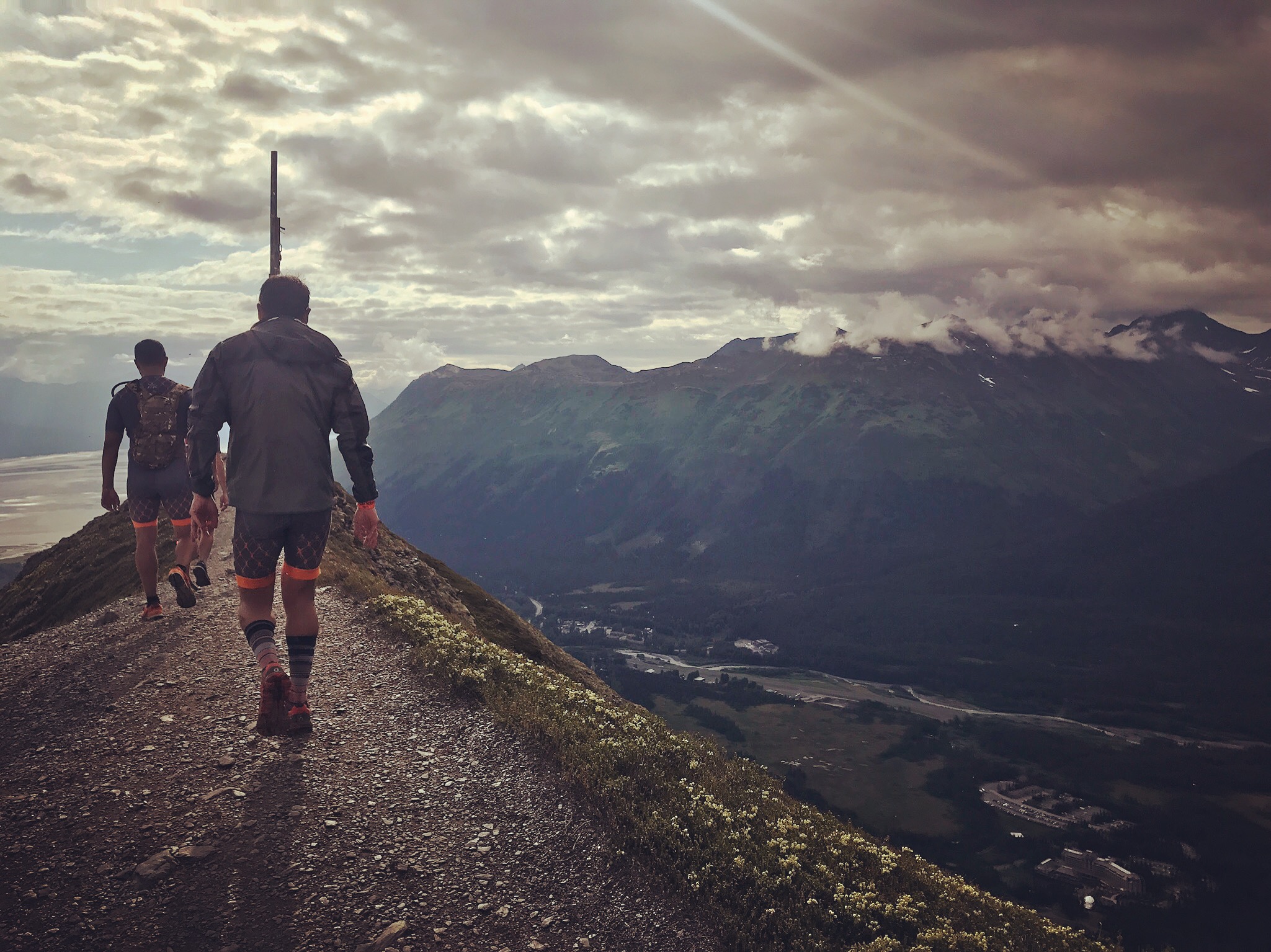
AlaskaMan · Seward, Alaska · this was who I was
Then it wasn't.
How I drifted
After a team race in Kerrville in 2019, COVID hit and the world got small. My training shrank with it, from swim-bike-run to kettlebells in a garage. That part was fine. The part that crept was the weed.
I've had ADHD since I was a kid. Diagnosed early, put on Ritalin, the whole story. My mind doesn't memorize answers, it learns formulas, and it needs something to land the hyperactivity somewhere useful. Cannabis helped me focus, so I leaned on it. A little became nightly. Nightly became a habit I built the day around.
Meanwhile life got loud in the best ways. We had a baby. We moved the gym. I got married. I bought a building. Every one of those is a win, and every one of them quietly ate the hour I used to give my own body. Mobility work stopped. Real cardio stopped. I didn't decide to quit. I just stopped showing up, one good excuse at a time.
The Formula
Stopped measuring + Life got loud + No feedback = Months gone before you feel it.
The crash that pulled the plug
September 2025. Out on a bike with my neighbor, my front wheel caught a crack in the road. The bike threw hard right, my body went left, and I hit the ground at about twenty miles an hour. Road rash everywhere. A shoulder that lit up for weeks. A snapped pedal, bent bars, and a Garmin Fenix 6 I'd worn for years, dead on impact.
That watch dying was the part I underrated. It was the end of my tracking. No watch, no data, no mirror held up to my week. Out of sight, out of mind.
Then February 2026 I caught a hematoma on my right hip snowboarding, because apparently I wasn't done. Through the frustration of both, weed helped, and it kept me off the pain pills. If you know my history, you know why staying off those mattered more to me than almost anything.
Jogs turned into walks with a joint. And the months went by.
So the waistline thickened. The runs became walks. The walks became walks with a joint. None of it felt like a decision. That's the whole danger. Decline doesn't announce itself. It just accumulates while you're busy calling it a season.
Father's Day, and a wake-up call
June 21, 2026. Father's Day. The house is loud in the way I love now, the baby into everything, coffee going cold while I chase him around. Jeraldine hands me a box. Inside is a Garmin Fenix 8.
Woah. I strap it on and it starts pulling my history down out of the cloud, and there it is. Every year of the athlete I used to be, populating the screen in real time. Bandera. Austria. Seward. The 800-mile months. A version of me I'd quietly filed away under "used to," staring back from my own wrist. The tech leap from the 6 is no joke, but that wasn't the part that got me. The part that got me was the contrast. All that history on a body that had stopped writing new chapters.
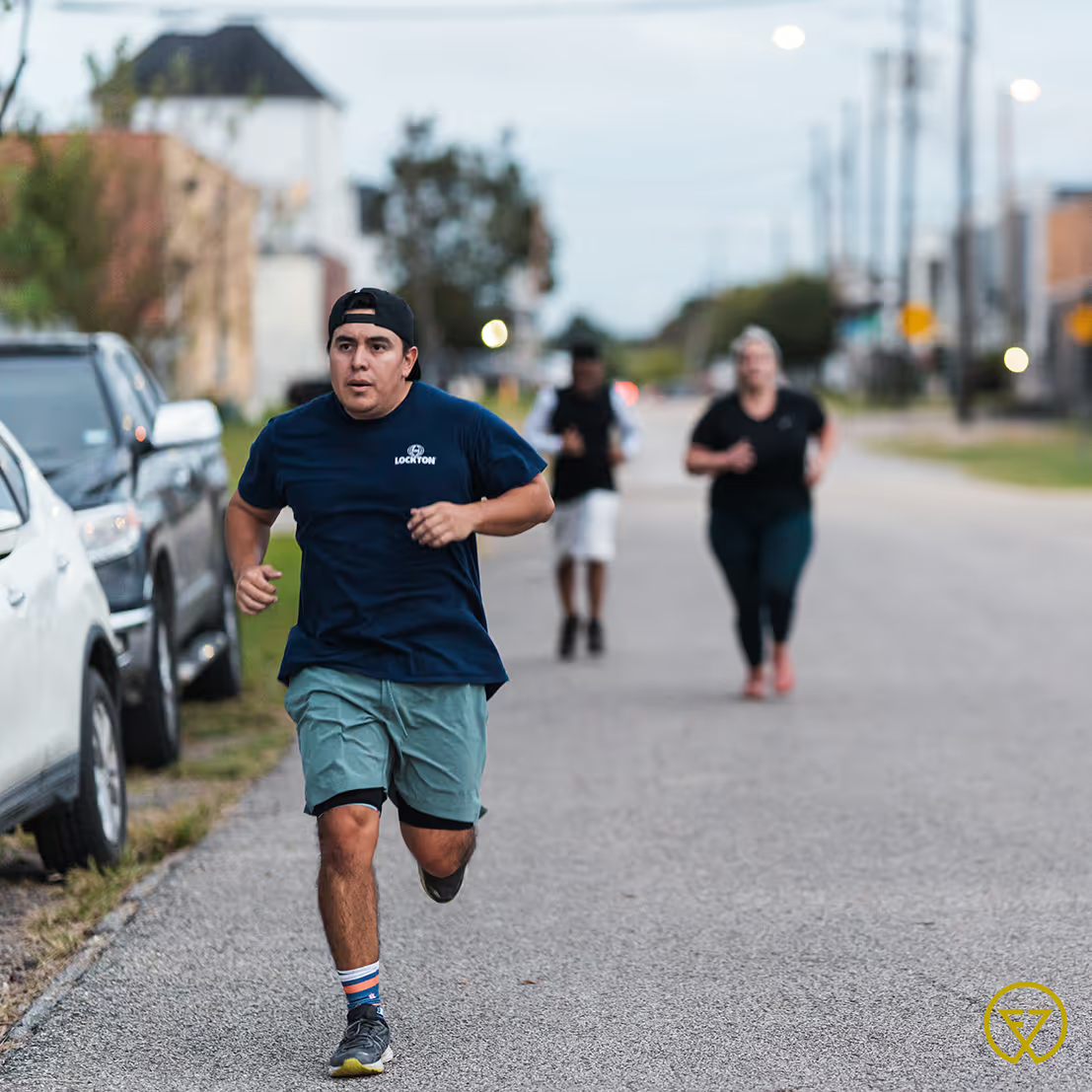
So that night, late, when the house finally went quiet, I laced up. No plan, no playlist, no expectations. Just me, the new watch, and a need to see where I actually stood instead of where I imagined I did.
And the watch did exactly what a good coach does. It told me the truth.
The data didn't flinch
Same body, new watch, old baseline to measure against. Here's what came back:
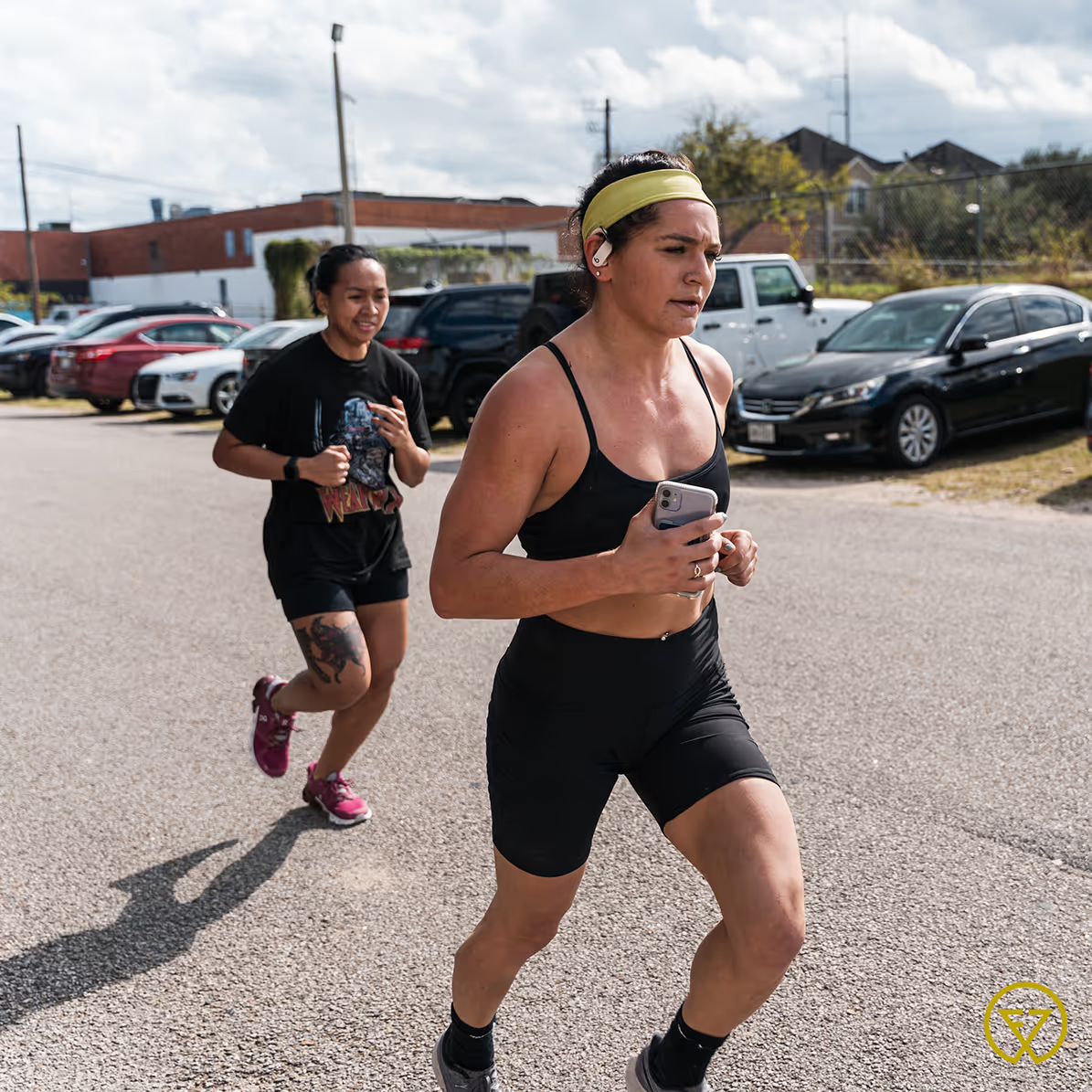
The run: 3.11 miles. 28 minutes, 54 seconds. A 9:18 per mile pace out in Friendswood, on a watch I'd owned for a few hours.
Heart rate average: held. Right around where it always sat.
Perceived effort: roughly 1.5x. Same heart rate, but it cost me half again as much to hold it.
Pace: 45 to 60 seconds slower per mile than the version of me on that old data.
Pace: 45 to 60 seconds slower per mile.
That's the bill for a year off the dashboard. Not a tragedy. Just the truth, in numbers I couldn't argue with.
The Formula
Same HR + 1.5x effort + 45 to 60 sec/mi slower = the honest cost of a year unmeasured.
The breath I'd been missing
But the number that mattered most wasn't on the screen. It was in my chest.
Lately it's been harder to get a full breath, and out on that run I could really feel it. So I did what I'd tell any client to do. I backed off. Pace down, heart rate under threshold, no ego in it. And I went looking for the breath.
It's the way you notice a door that used to swing open easy and now sticks. Top of the lungs filled fine. The bottom stayed locked. I kept after it, slow and patient, like chasing a gulp of water when you're truly thirsty. For a while the air just wouldn't go where I was asking it to.
Then, finally, like a deep yawn without the yawn, it dropped. Low. Full. I felt the floor of my lungs for the first time in months. And it stayed. Hours later, sitting here writing this, I'm still catching breaths I'd been missing without knowing it.
One run. One honest breath. That was enough to change a habit.
The honest part about the weed
I'm not going to pretend my way out of this section. I did the research, and I'll give it to you straight, both sides.
There's a real case for it. Dorian Yates, six-time Mr. Olympia, is one of the most open advocates in the sport and calls it part of a holistic approach. Andrew Huberman lays out that certain strains can sharpen focus, which is exactly why my ADHD brain reached for it in the first place. That part isn't in my head.
But here's the line I can't unsee. Huberman is also clear that smoking or vaping anything, cannabis included, harms lung function. Smoke is smoke. And my own chest just spent a month telling me the same thing the science says. Even Dorian, after years of heavy use, landed on a simple idea worth borrowing: cannabis can be good for you, but don't build your day around it. Use less. Use it on purpose.
So I'm not quitting the plant. I'm changing the delivery. The smoke is what's taxing the one system I need most to run, breathe, and live long. That goes. Edibles, in moderation, stay.
The Change
Not quitting the plant. Changing the input. Smoke out, edible in, lungs first.
The actual point
I run two gyms. I coach this for a living. And I still let a year slip by unmeasured, because I walked away from the dashboard entirely instead of just taking a break from it.
That's the lesson, and it's for you as much as me. Plug into the wearable world. Take days off the dashboard when you need to, that's healthy. Just don't disappear from it for months, because the drift is silent and the bill comes due all at once. A watch doesn't judge you. It just refuses to let you lie to yourself.
The Rule
Take days off the dashboard. Don't disappear from it.
The experiment, out loud
Here's where I put my own skin on the table. I'm running this as a test, and I'm telling you the protocol up front so I can't fudge it later.
- I take my FitnessEQ on July 1 for a real baseline. Six facets, scored honest.
- Thirty days of work. Running back on, tracked. Smoke out, edibles only and less of them. Sleep and breath in the spotlight.
- I re-take the FitnessEQ on July 31 and we compare the two side by side.
Then I report back, right here, in Part 2. Did cutting the smoke move the breath? Did the pace come back? Did the sleep score climb? I don't know yet. That's the point. We're going to measure it instead of guess.
The Test
FEQ July 1 + 30 days of work + FEQ July 31 = proof, not vibes.
If you've drifted too, don't start with a verdict. Start with a number. Come get your baseline and run the experiment with me.
Get your number first.
The FitnessEQ is a six-facet baseline assessment. Free, about thirty minutes, and the most honest thirty minutes you'll spend on your health this summer.
Take the FitnessEQ →
Layn ChessFounder and Training Director of Facet Seven Fitness. Triathlete, gym builder, and a work in progress like everybody else. Writing the comeback in real time.
This is my personal experience and my own read of the research, not medical advice. I'm a coach, not your doctor. Cannabis laws and effects vary, and what's right for one body isn't right for another. If you're making changes to substances, training, or recovery, talk to a qualified professional who knows your history.
© 2026 CMV, LP. Facet Seven Fitness™ is a brand of CMV, LP.