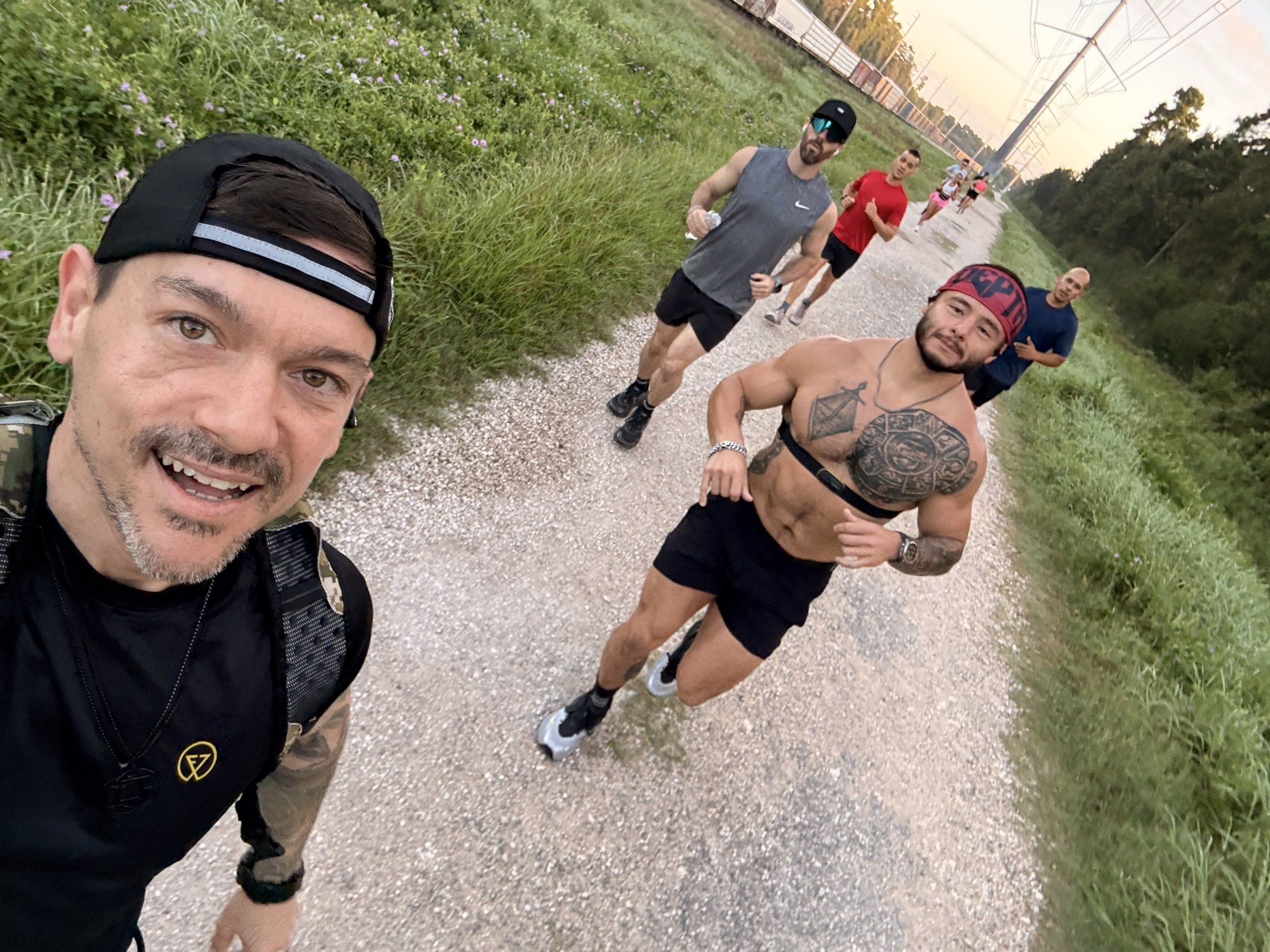
Speed.
Threshold.
Base.
Part of our running series. Run Better in 2027 covered the three energy systems. Yoga for Runners covered owning your range. Salt and Runners covered fueling. Black Toenails and Snot Crust covered the wear and tear. This one covers how the training itself is built.
Every runner's training is built in three phases. Speed, threshold, and base.
Most runners only train one of them. They run the same comfortable pace most days, and the clock stops moving.
Each phase builds something different, and all three feed the same engine. Here's the research.
Of elite endurance training is done at low intensity. The other 20% is the hard work.1
VO2 max gain in 8 weeks from 4-minute intervals. Long slow running and threshold running at the same total effort did not raise it.2
Of the energy in a 1,500 m race comes from the aerobic system. Even fast running is mostly oxygen.3
Of VO2 max is the range elite marathoners hold for 26.2 miles.4
The three phases
In Run Better in 2027 we covered the three energy systems: phosphagen for the first seconds, glycolytic for hard minutes, and oxidative for everything long. Each phase of training leans on a different blend of those systems.
Speed
Raises the ceiling
Short, hard repeats in Zone 4 and 5, with easy running between. Speed work grows your VO2 max, the most oxygen your body can use per minute. In one study, 4 x 4-minute intervals raised VO2 max more than long slow running or threshold running, and the gains tracked with a stronger heart that pumped more blood per beat.2
Threshold
Closes the gap
Longer repeats in Zone 3 and 4. Threshold is the fastest pace you can hold before lactate builds faster than your body clears it. A higher threshold lets you run closer to your ceiling for longer.5
Base
Builds the engine
Long, easy running in Zone 2 and 3. Base is where the body builds more mitochondria, the power plants in the muscle. More mitochondria means you burn more fat and less stored sugar at the same pace, and make less lactate doing it.6
All three systems are always on. Each phase just turns one of them up.
Speed builds the ceiling. Threshold closes the gap. Base builds the engine under both.
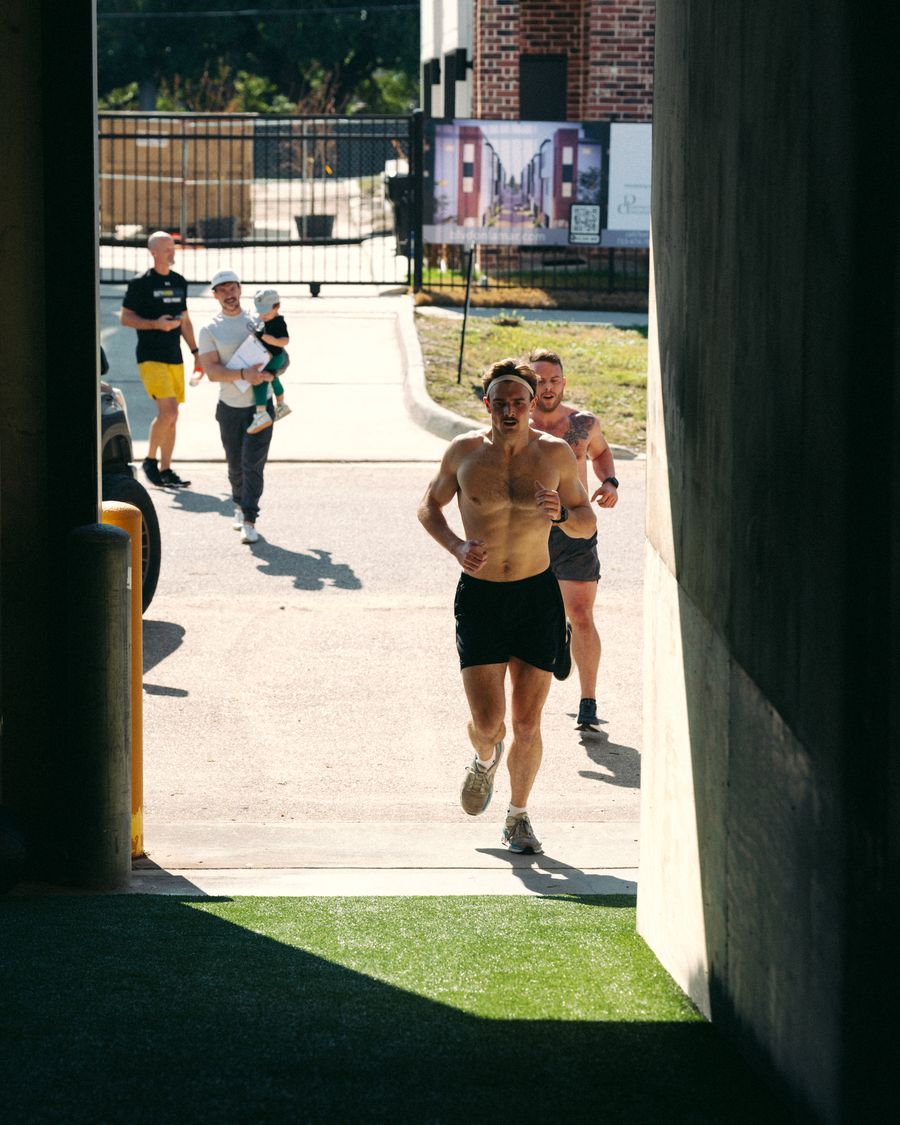
One engine, three phases.
VO2 max runs through all of them.
VO2 max is the size of your engine. It's the most oxygen your body can take in and use in a minute, measured in milliliters per kilogram of body weight. Three things decide how fast you can run a long way: how big the engine is, how much of it you can use for hours, and how little oxygen each stride costs.45
Grow the engine. Use more of it. Spend less oxygen per stride.
Where a bigger engine pays off
The long run is where you feel it. A bigger VO2 max makes the same pace a smaller share of your max. That's an easier effort, more fat burning, and glycogen that lasts longer. Or you hold the same share and run faster.
Raise VO2 max from 50 to 54.
That's an 8% gain, in the range the interval study saw in 8 weeks.2 Marathon pace at 75% of VO2 max:
- Hold the old pace and it costs 69% of your engine instead of 75%. Easier miles, more fat, more glycogen left at mile 20.
- Hold 75% and you have 8% more oxygen per minute to spend. With the same running economy, that's roughly 8% more speed. A 4:00 marathon becomes about 3:42.
Illustration only. Real gains depend on your starting point, your threshold, and your economy.
A bigger engine pays off beyond race day. In more than 120,000 adults, higher cardiorespiratory fitness was tied to lower long-term mortality, with no upper limit to the benefit.7 We measure it in FitnessEQ with the Cooper Test, a 12-minute run that estimates VO2 max.8
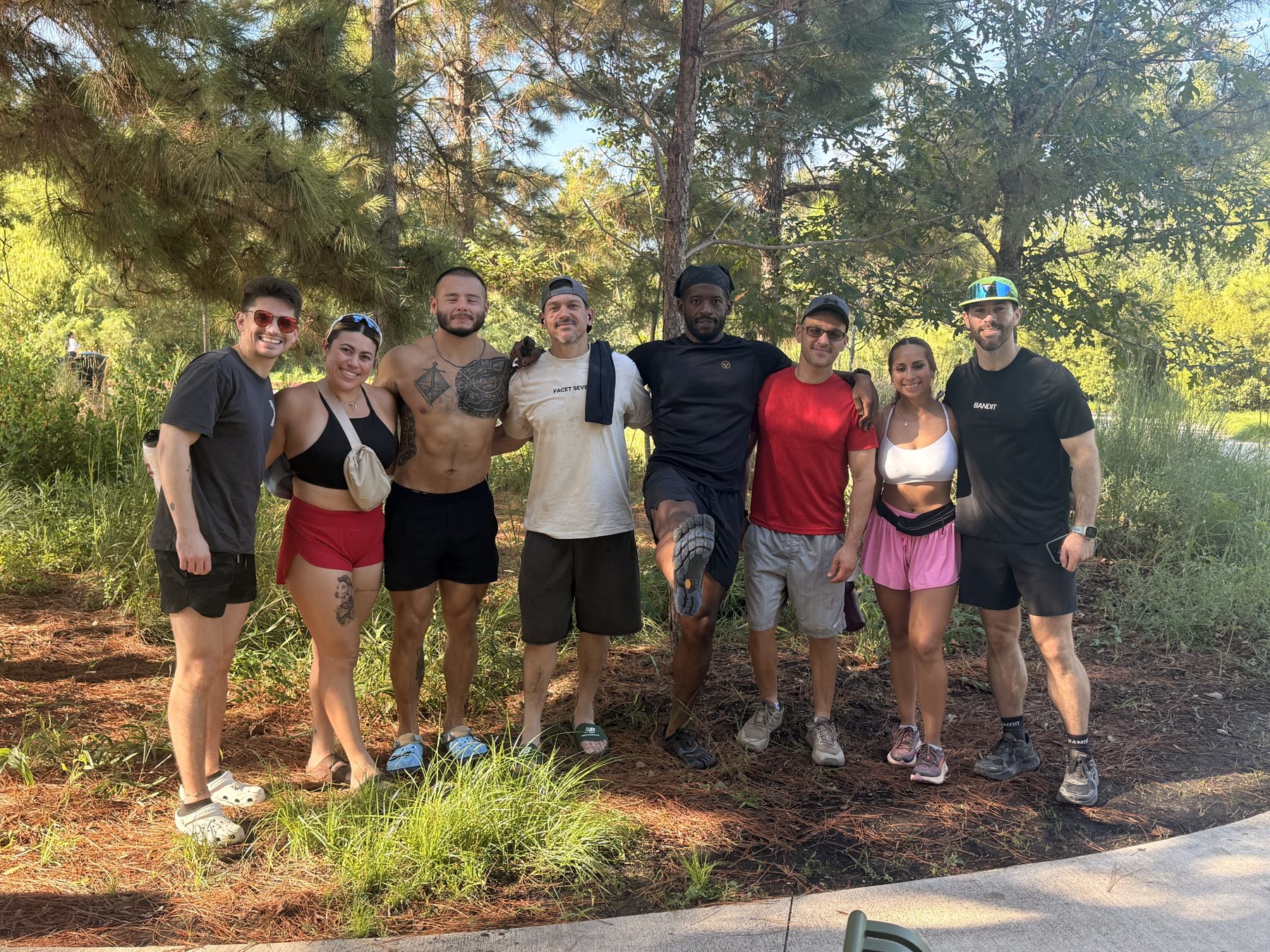
Week 6, all three phases.
Plus three strength days.
Here's Week 6 of our Runners High Marathon Strength program. Speed on Wednesday, threshold on Friday, base on Sunday, and strength on the days between, because strength breeds endurance.
The full week, with every interval, lift, and core movement laid out day by day, is free.
Download Week 6 (PDF) ↓Runner questions, answered
What are the three phases of run training?
Speed, threshold, and base. Speed raises VO2 max, threshold raises the pace you can hold before fading, and base builds the aerobic engine with long, easy miles.
How much of my running should be easy?
Elite endurance athletes do about 80% of their training at low intensity and about 20% hard.
Does VO2 max matter for a marathon?
Yes. Marathon pace is a share of your VO2 max. A bigger VO2 max makes the same pace easier, or lets you hold the same effort at a faster pace.
What energy system does a marathon use?
Mostly the oxidative system, burning fat and carbohydrate with oxygen. The glycolytic system steps in on climbs, surges, and the finish.
The point
Speed, threshold, and base aren't three different trainings. They're three ways to build one engine.
Grow the engine with speed. Learn to use more of it with threshold. Make it cheap to run with base. Then show up on race day with all three.
Movement is half of the formula. The other half is what you feed it.
Nutrition for Longevity
Learn how to fuel training, recovery, and a long life. The course is built by Facet Seven on the same Movement + Nutrition formula behind LongevityME, taught by La Professora.
Join the run crew
Rather have a plan and a crew? Join our WhatsApp group and train for your next long race with people who will meet you at the start line.
Reading on your phone? Tap the button. On a laptop? Scan the code.
Know a runner who runs every mile at the same pace?
Send this their way.

Movement for Life.
Cheers,
Layn Chess
Founder & Training Director
Facet Seven Fitness
- Stöggl TL, Sperlich B. The training intensity distribution among well-trained and elite endurance athletes. Front Physiol, 2015.
- Helgerud J, et al. Aerobic high-intensity intervals improve VO2max more than moderate training. Med Sci Sports Exerc, 2007.
- Spencer MR, Gastin PB. Energy system contribution during 200- to 1500-m running in highly trained athletes. Med Sci Sports Exerc, 2001.
- Joyner MJ. Modeling: optimal marathon performance on the basis of physiological factors. J Appl Physiol, 1991.
- Joyner MJ, Coyle EF. Endurance exercise performance: the physiology of champions. J Physiol, 2008.
- Holloszy JO, Coyle EF. Adaptations of skeletal muscle to endurance exercise and their metabolic consequences. J Appl Physiol, 1984.
- Mandsager K, et al. Association of cardiorespiratory fitness with long-term mortality among adults undergoing exercise treadmill testing. JAMA Netw Open, 2018.
- Cooper KH. A means of assessing maximal oxygen intake. JAMA, 1968.
This post is education, not medical advice.
© CMV, LP. Facet Seven Fitness™ is a brand of CMV, LP