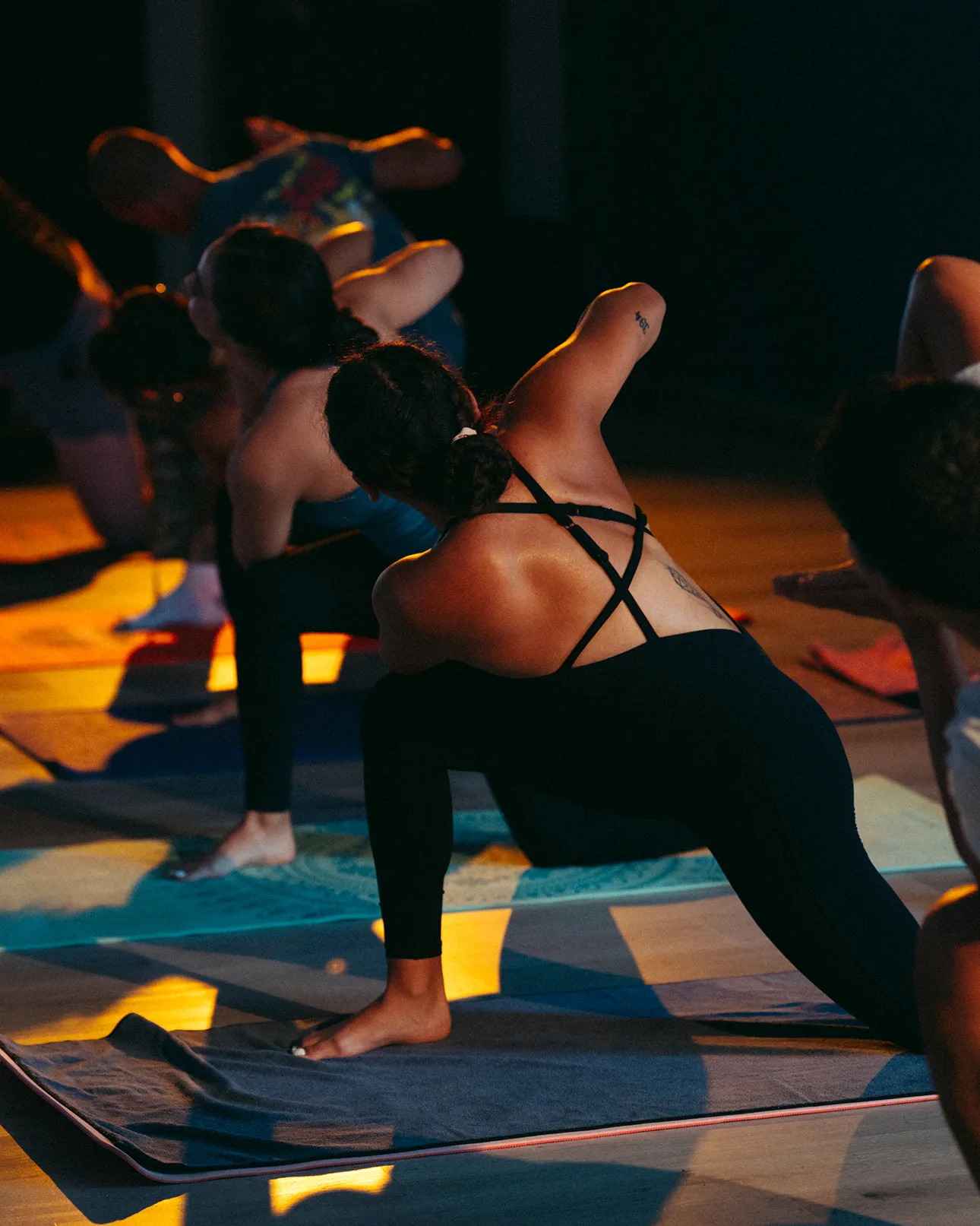
If you feel sluggish, inflamed, numb, disconnected, who’s really in control?
THINK ABOUT IT...
You’ve been conditioned to think about your body as something mechanical, as an object to drag through the day- something to push, fix, punish or decorate…
But never as sacred…
Never as intelligent… as a vessel of Divine intention.
The ancients knew this. The body was never a burden, it was a temple. Not just in theory, but in function.
Every breath you take, every cell in your gut, every spark in your nervous system, it’s all part of a living code designed for perception beyond the 5 senses. But the modernism of the recent centuries is teaching you constantly to ignore it.
Start with the gut.
The gut produces more neurotransmitters than the brain, it’s your second brain, regulating your mood, your energy, and your spiritual receptivity. Yet it’s constantly under attack.
Pesticides, processed foods, antibiotics, synthetic preservatives, all designed not just to destroy gut flora, but to destroy our capacity to feel clearly. When your gut is compromised, your mind is clouded. When your digestion is inflamed your thoughts are unstable.
Those in the “remedy” business don’t want you to be sharp, focused, and intuitive… they want you bloated, distracted, emotionally volatile, and they’ve engineered the food system to be sure.
But it’s not just the food. It’s your water, your air, your light.
Tap water filled with endocrine disrupters. Air saturated with industrial toxins. Artificial light that scrambles your circadian rhythm and drains your life force. And through it all you're told this is normal, you're told to adapt. To medicate. To caffeinate. To carry on. And when your body starts breaking down they offer pills instead of root solutions.
They give you diagnosis after diagnosis but never ask the real question -
what are you feeding the instrument of your divinity?
That system doesn’t profit from your clarity…it profits from your chaos.

This is why healing your body isn’t just a wellness trend.
It’s an act of Rebellion.
It’s the foundation of awakening.
Your consciousness can’t fully rise in a body that’s drowning in inflammation, toxicity, and fatigue.
You can’t connect to the Divine when your nervous system is in survival mode. You can’t remember who you are when your cells are constantly battling the poisons of modern life.
Liberation isn’t only mental, it’s cellular. And every choice you make, every meal you eat, every breath you take is either feeding your awakening or feeding your suppression.
And here’s the real breakthrough.
Your body wants to wake up. It’s always communicating. Always recalibrating. Always moving towards healing when you give it even half a chance. And when you start treating it like the intelligent energetic vessel it is, everything shifts. Your thoughts clear, your emotions balance. Your intuition sharpens. That’s not a coincidence. That’s coherence.
That’s not a coincidence. That’s coherence.
The state where your body, mind, and spirit align into one unified field. That’s when you stop living from your head, and start living from your whole being. That’s where awareness stops being a concept, and starts becoming your baseline.
Most coaches bypass this.

They tell you to rep your problems away while still eating food that numbs your senses and scrolling until your dopamine is fried. But you can’t hack your way to awakening. You have to live it, feel it in your skin. In your gut, your breath. This is true embodiment. Not the aesthetic kind, but the kind that rewires your nervous system and clears the fog from your perception. Because the Divine doesn’t live in the sky or in scriptures. It lives in your blood, your bones, your breath. You don’t have to look outside to find it. You just have to clean the vessel it’s been trying to move through all along.
TAKE BACK CONTROL OF WHO YOU ARE.
Rebel against being blind… Rebel against the leeches of your energy.
Find who you were meant to be.
Find who you are.
We have courses designed to awaken you. Learn the basics of how your body moves.
DISCOVER HOWTake the purple pill and go down the rabbit hole with us. We are here for you, all the way.
TAKE THE LEAPMovement for Life
StrengththroughLength.
Part of our running series. Run Better in 2027 made the case for running less and training more. This one covers the piece most runners skip: how to own the range your stride lives in.
I found yoga in 2012, the same year Facet Seven opened its doors. I started taking classes with our first yoga instructor, and he changed the way I understood muscle.
He taught me that a muscle gets strong and stable when you train it in its lengthened positions. He introduced these concepts to me through Pralaya and Hatha style yoga. Patient work at the edge of your range, giving the body time to learn a new length and learn it can be trusted there.
That lesson became the most valuable piece of movement advice I can give, and every client I've ever worked with has learned and memorized this concept. It's the mantra for this blog.
"Strength through Length."
The mantraA tight muscle is a busy muscle
Here's how I explain it on the gym floor.
Think of a muscle like the crew on a sailboat. A crew at rest can grab any line the moment the wind shifts. A crew already hauling on three lines has nothing left for the fourth.
A tight muscle is that second crew. It's already at work, guarding a joint, bracing against fatigue, or holding a posture you didn't choose. Whatever it spends on that job is gone before your foot ever hits the ground.
- Already occupied with fatigue, guarding, or alignment
- Less left over for the stride
- Shorter range, so the stride shortens with it
- Quiet when it's at rest
- Fully available when you call on it
- Moves through its whole range, so the stride gets all of it
Running is thousands of the same small asks in a row. Muscles that can rest when they're not needed, then work through their full range when they are, will carry you further with less wear on the joints in between.
What the research says, and where it pushes back
I'm not selling you a feeling. Here's what the science supports, and the two places we can add a caveat worth knowing.
Training at long muscle lengths builds strength there. A 2019 systematic review found isometric holds at longer muscle lengths built more muscle than the same work at short lengths, and carried over better to dynamic movement. (Oranchuk et al., 2019)
Long holds can build strength, not just range. In a series of studies, people who stretched one calf for an hour a day for six weeks gained strength, muscle thickness, and range in that leg. An hour a day is a lab dose, not a lifestyle, but the direction is clear. (Warneke et al., 2022 to 2023)
Every form of stretching improves range of motion. Part of that gain is the tissue, and part is the nervous system learning to trust the new range. (Behm et al., 2016)
Runners need some stiffness. Among international level distance runners, the least flexible on a sit-and-reach test were the most economical. Springy tendons hand energy back to you every stride. (Jones, 2002)
Stretching right before a run won't prevent injury. A randomized study of 2,729 runners found no difference in injuries between those who static stretched before running and those who didn't. Holds of 60 seconds or more right before training can also take a little pop out of your legs. (Pereles et al., 2011; Behm et al., 2016)
So the goal isn't the loosest runner on the start line. Tight means guarded. Stiff means springy. Supple means owned.
The formula
Lose the guard. Keep the spring. Own every inch of your range.
The styles of yoga
There's no official registry of yoga styles. These are the ones that are well documented and widely taught today:
Every one of them has its place. For runners, three do the most work.
The three for runners
Pralaya
Strength through your full range
Pralaya is my top pick for runners. It was developed right here in Houston by Robert Boustany, and it's an active practice. You work at the edge of your range and strengthen the weak side of each joint so it sits balanced, while freeing up connective tissue where it's bound.
That's Strength through Length in practice. Find your range, hold it, condition it, then increase it. Over weeks you gain control, strength, and stamina in positions your stride actually uses.
A fair note: it's a younger system with less published research than Yin or Vinyasa. The principle behind it, training muscle at long lengths, is the part the research above backs.
After a run, weave a few minutes of it in while your hips and ankles are still warm. That's where it adds the most on top of recovery.
Vinyasa
Fluid range, joints that glide
Vinyasa links movement to breath, one pose flowing into the next. It takes every joint through its range without parking anywhere long, which is exactly what a warmup should do. The research favors moving stretches before training, not long holds.
It won't add much new range on its own. It keeps the range you have oiled, warm, and ready, which is why it's my pick for mornings, pre-run warmups, and maintenance days.
Yin and Hatha
Recovery, joint health, corrections
Yin and Hatha are where you recover. Yin holds passive positions for 2 to 5 minutes. Hatha holds classic postures with steady breath for shorter stretches. Both let the tissue and the nervous system settle into a little more range, and both are a good way to work on a stubborn hip or ankle without adding load.
Passive range is where it starts. Pralaya is where you own it. Save long holds for after training or before bed, never right before a run.
The formula
Flow before you run. Recover after you run. Build strength in your range once a week.
Daily, not heroic
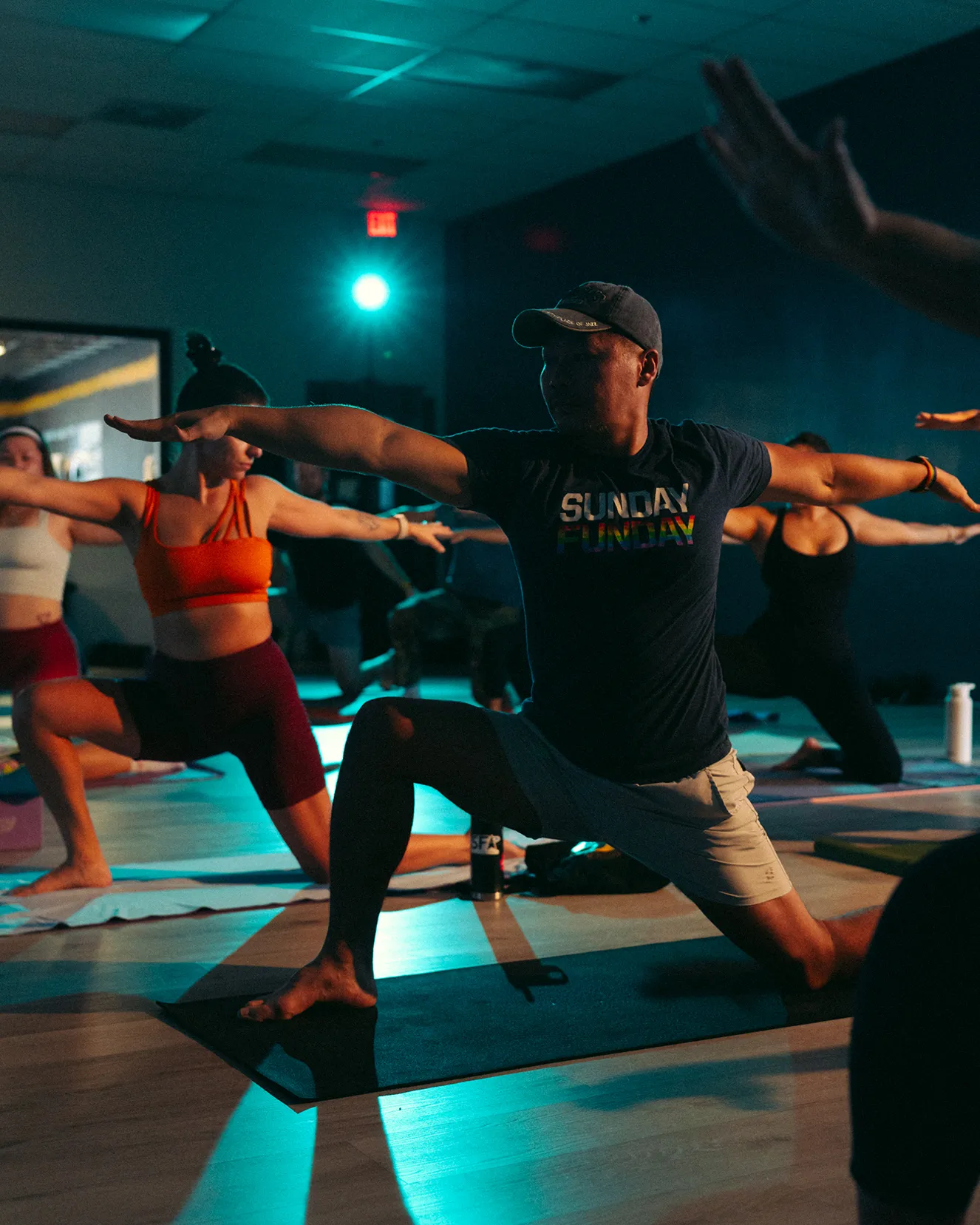
Yoga works best done daily, morning and evening. Most people hear that and picture an hour-long session three times a day. Not so.
You need 3 to 5 poses chosen for your body, placed in the right windows.
5-15 min
When you wake upVinyasa. 3 to 5 poses for your hips, spine, and shoulders.
15 min
After trainingYin or Hatha. Hold the areas you just used. After runs, weave in Pralaya.
10 min
On the way to bedYin or Hatha. Long, easy holds to settle the body for sleep.
45-60 min
Once a weekPralaya. Strength through your full range, full body or one problem area.
That's 30 to 40 minutes on a training day, spread across the whole day. Small enough to keep. Consistent enough to work.
A runner's week, with yoga built in
Here's Week 9 of our Bandera 50K Ramp Program, laid out with the yoga layer added. One yoga day, two strength days, an ancillary strength day, and three runs.
Day off from training
AM Vinyasa. 45 to 60 min Pralaya. PM Yin.Push
AM Vinyasa. Post Yin or Hatha, chest and shoulders. PM Yin.Speed, 5 mi
Vinyasa warmup. Post Yin or Hatha plus Pralaya. PM Yin.Legs
AM Vinyasa. Post Yin or Hatha, quads and hips. PM Yin.Threshold, 6 mi
Vinyasa warmup. Post Yin or Hatha plus Pralaya. PM Yin.Pull + ancillary strength
AM Vinyasa. Post Yin or Hatha, upper back and spine. PM Yin.10 mi, Zone 2
Vinyasa warmup. Post Yin or Hatha plus Pralaya. PM Yin.The full week, with every run, lift, and pose laid out day by day, is free.
Runner questions, answered
Is yoga good for runners?
Yes. Done right, it builds usable range, strength at long muscle lengths, and a recovery habit. Keep long holds after running, not before.
Should runners do yoga before or after a run?
Both, in different styles. Flow-style yoga like Vinyasa works as a warmup before. Long holds like Yin and Hatha belong after training or before bed, with Pralaya woven in after runs.
How often should runners do yoga?
Daily, in small doses. 5 to 15 minutes in the morning, 15 after training, 10 before bed, and one 45 to 60 minute Pralaya session a week.
What is the best yoga for runners?
Pralaya for strength through your full range, Vinyasa for warmups and joint health, and Yin and Hatha for recovery.

The point
Strength through Length. Train a muscle where it's longest and it becomes strong and steady there, which is exactly where your stride lives at the bottom of a descent and the end of a long run.
Flow before you run, recover after, weave in Pralaya, build strength in your range once a week, and keep it small enough to do every day.
Movement is half of the formula. The other half is what you feed it. Training breaks you down, yoga and sleep help you rebuild, and food is the raw material for all of it. Understanding nutrition is what turns good training into lasting results.
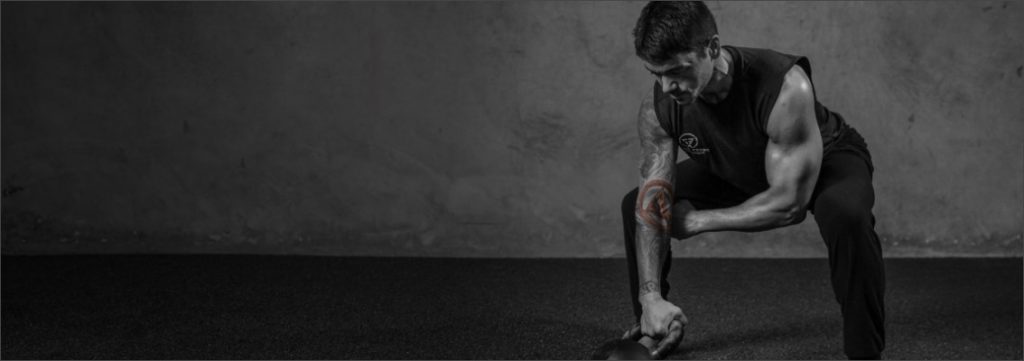
Movement for Life.
Cheers,
Layn Chess
Founder & Training Director
Facet Seven Fitness
Research referenced
- Oranchuk DJ, et al. Isometric training and long-term adaptations: effects of muscle length, intensity, and intent. Scand J Med Sci Sports, 2019.
- Warneke K, et al. Long-duration static stretching and maximal strength, muscle thickness, and flexibility. Studies in Frontiers in Physiology, IJERPH, and Eur J Appl Physiol, 2022 to 2023.
- Behm DG, et al. Acute effects of muscle stretching on physical performance, range of motion, and injury incidence. Appl Physiol Nutr Metab, 2016.
- Jones AM. Running economy is negatively related to sit-and-reach test performance in international-standard distance runners. Int J Sports Med, 2002.
- Pereles D, et al. Randomized study of pre-run static stretching and injury in 2,729 runners. American Academy of Orthopaedic Surgeons Annual Meeting, 2011.
© CMV, LP. Facet Seven Fitness™ is a brand of CMV, LP